
Instructions for theCasement Window
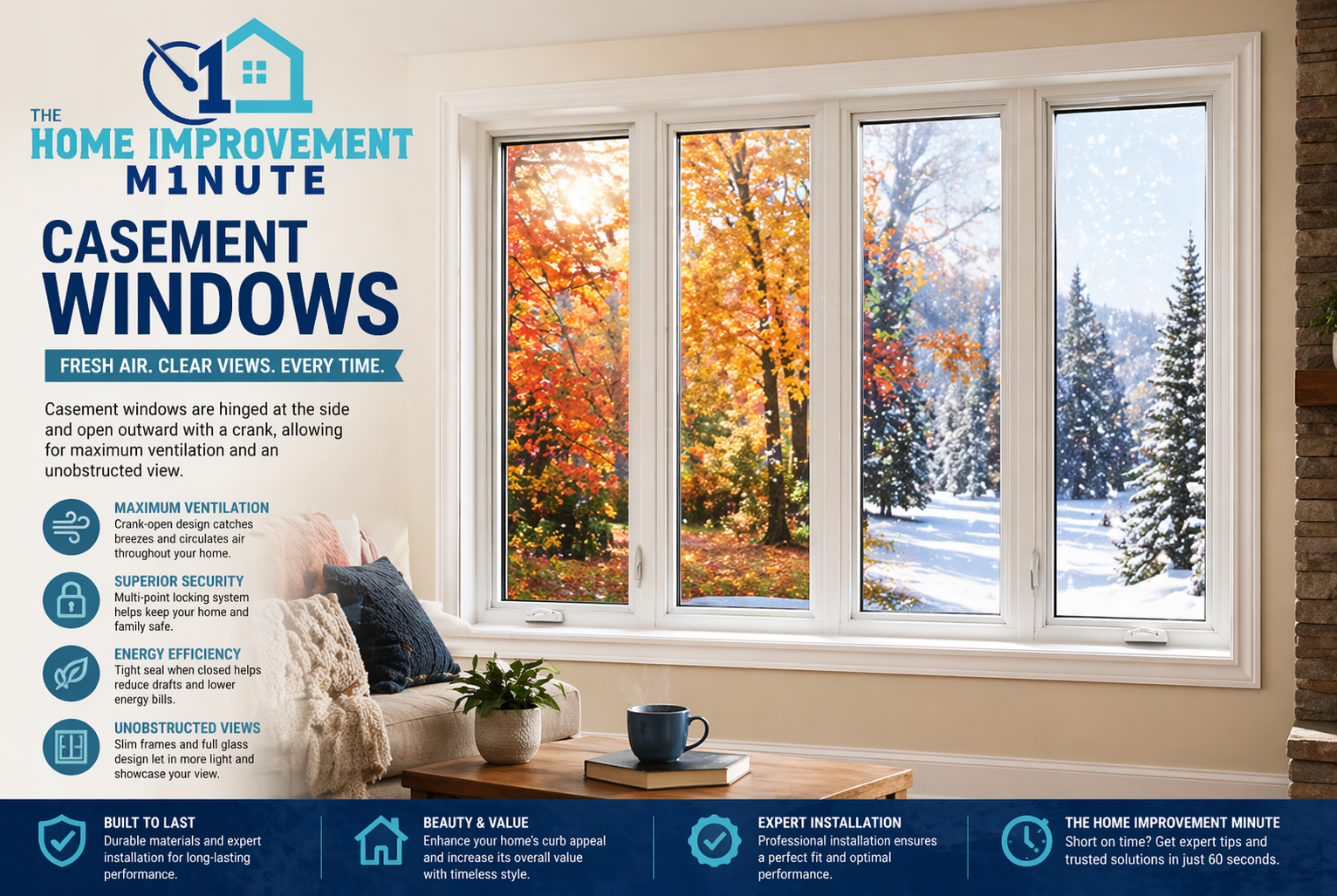
Casement window advantages start with one simple move: you turn a small crank, and the whole sash swings out on its hinges like a door. This manual covers the hardware, five jobs a casement does well, the trade-offs and the care that keeps it cranking.
- Read time · 9 minutes
- 1 crank
- 2 hinge arms
- 1 compression seal

Read This First: Casement Window Advantages in 30 Seconds
A casement is hinged on one side and cranked open from inside. Closing, the sash presses into its weatherstripping instead of sliding past it, so the U.S. Department of Energy lists casements with compression seals among the more airtight types. Open, it catches side breezes, clears nearly the whole frame for an exit and opens over a sink with one hand.
The fine print: an outswing sash needs clear space outside, and the hardware likes yearly care. Plan for both and the casement window advantages are yours to keep.
Parts Diagram: What Makes It Work
Every one of the casement window advantages traces back to three pieces of hardware.
Crank Operator
A handle on the sill turns a gear that drives an arm, pushing the sash out or pulling it home. The window opens to any angle and stays there.
Hinge Arm & Track
Hinges at the top and bottom of the sash ride a track as it swings. On some designs the arm also slides the sash toward the middle, leaving room to wipe the outside glass from indoors.
Compression Seal
Weatherstripping runs around the frame. When the sash cranks shut and locks, it squeezes the seal instead of sliding along it. That squeeze keeps outside air outside.
About half the air leakage: that’s how windows with compression seals compare with double-hung and sliding windows that use sliding seals, according to the DOE / NREL Energy-Efficient Windows fact sheet.
Turn the Crank: Watch the Sash Work
Pick an angle. The sash swings, the arrows show the air and the gauges show the seal: casement window advantages in motion.
0°: Closed and Locked
The sash is pulled tight into the weatherstripping and the lock is set. Lock it every time, since the lock finishes the squeeze.
30°: Cracked for Fresh Air
A few turns in, the seal lets go and a thin stream of air slips in. Handy for a steamy kitchen on a mild fall afternoon.
60°: Working as a Scoop
The sash stands out like a sail. A breeze moving along the house hits the glass and turns inward, one of the casement window advantages sliding styles can’t copy.
90°: Fully Open
The sash swings clear, so nearly the whole frame is open air for ventilation or escape. On a gusty day, crank it back partway.
Steps 1–5: Five Casement Window Advantages
Each step is one job the casement does well, with the reason behind it.
Close It Tighter
Double-hung and sliding sashes glide past their weatherstripping, so the seal has to stay loose enough to move. A casement closes straight into its seal. The DOE / NREL fact sheet calls casements with compression seals moderately airtight and says compression-seal windows leak about half as much air as styles with sliding seals.
Fewer drafts by the couch in January: of all the casement window advantages, it’s the one you feel with the window shut. For label numbers, see our guide to window performance ratings.
Catch the Side Breeze
A sliding window waits for the air. A casement reaches out and gets it.
Wind rarely blows straight at a window; it slides along the walls. An open sash sticks out into that flow and turns it inside, and you choose which way each unit swings. The same DOE fact sheet notes casements provide good ventilation when opened.
Put two on opposite walls and fresh air moves through the room without a fan, among the benefits of casement windows people notice first.

Open a Clear Way Out
Ohio’s residential code says every sleeping room needs at least one operable emergency escape and rescue opening. Under Section 310 of Ohio Adm.Code 4101:8-3-01, that opening has to meet these sizes, and it must open from inside without keys, tools or special knowledge.
Because the whole sash swings away, more of the frame counts as clear opening than with a sash that slides over half of it. That’s one of the quieter casement window advantages. Your local building department makes the final call.
Open It With One Hand
Pushing a sash up over a sink or deep counter means leaning hard. A crank needs only a wrist, so these are classic spots for casement window advantages:
- Over the kitchen sink
- Behind a tub or vanity
- Above a deep counter
- Narrow walls by a stair
- Flanking a picture window
- Walls that catch a side breeze
Screens Inside, Views Outside
Since the sash swings out, the screen mounts inside the frame, out of the weather and easy to lift out. With no meeting rail across the middle, the glass reads as one clean pane.
Comparing styles? Our replacement window styles guide lays out every type; this manual stays on the five casement window advantages.
Troubleshooting: Trade-Offs to Plan Around
Weigh these next to the casement window advantages before you choose. None is a defect; it’s how an outswing window behaves.
| Condition | What it means | Plan for it |
|---|---|---|
| Strong gusts | A wide sash open all the way acts like a sail in the wind. | Crank partway on windy days; close before storms. |
| Moving hardware | The crank, gears and hinge tracks are parts that move and collect grit. | A quick yearly clean and check (page 6). |
| Size limits | Each maker sets a maximum sash width and height for its hinges. | Use a pair, or a fixed center unit, for wide openings. |
| Outside clearance | The open sash swings into the space outside the wall. | Skip spots that open onto walkways, decks or patios. |
| Window AC units | There’s no sliding sash for a unit to rest under. | Plan that room’s cooling another way. |
Swing direction matters. Order each unit to open toward the breeze and away from foot traffic. Weighing the pros and cons of casement windows room by room? This choice settles most of them.
Care & Maintenance Schedule
A few minutes a season keeps the casement window advantages working like install day. Check your maker’s care guide for products.
- Wipe the sealClean the weatherstripping with mild soap and water. Look for flat, torn or loose spots.
- Clear the trackVacuum grit from hinge tracks and the sill. Dirt in the track makes a crank feel stiff.
- Run the crankOpen and close it fully. Grinding or slipping points to worn operator parts, which are often replaceable.
- Lube moving partsUse the product your maker specifies on hinges and the operator. Skip heavy grease that holds dirt.
- Lock before frostBefore the first hard freeze, close and lock every casement so each seal sits fully compressed.

The First-Frost Walk
Leaves are down and the furnace is on. Crank each casement shut and set the lock. If a sash won’t pull snug, have it checked before January.
Shopping for new ones? Thrush & Son installs Nobility casement windows across the Miami Valley, and we’ll bring a sample so you can test the casement window advantages yourself.
The Takeaway Worth Sharing
A casement seals like a door, scoops breezes like a sail and clears like an exit. Lock it, keep the track clean, and it keeps every promise on the box.
Pass this along to the friend still wrestling a sash over the kitchen sink.

Questions About Casements? Call the Service Center
Thrush & Son®: family-owned exterior pros since 1960.
If you’re in the Miami Valley and weighing casement window advantages for your own rooms, read the Thrush & Son® guide to casement windows, then book a visit.
➡️ Schedule in Dayton➡️ View All ServicesCall (937) 833-5136 · 115 Jefferson St, Brookville, OH 45309
- GAF President’s Club Contractor
- Best of Dayton 2024 Winner · 2025 and 2026 Finalist
- BBB Accredited A+
Further Reading
Official sources: the U.S. Department of Energy / NREL Energy-Efficient Windows fact sheet and the Residential Code of Ohio, Ohio Adm.Code 4101:8-3-01 (via Cornell LII).
Casement Window Advantages FAQ
What are the main casement window advantages?
A tighter seal when locked, strong ventilation from side breezes, a wide clear opening for emergency escape, easy one-hand opening over sinks and counters, and an inside screen with an open view.
Do casement windows leak less air than double-hung windows?
Usually. A DOE / NREL fact sheet says windows with compression seals, like casements, have about half the air leakage of double-hung and sliding windows with sliding seals. Glass and frame ratings matter too.
Can a casement window be an egress window in Ohio?
Yes, if it’s sized right. Ohio’s residential code calls for at least 5.7 square feet of net clear opening (5 square feet at grade floor or below grade), 24 inches of clear height, 20 inches of clear width and a sill no higher than 44 inches.
What are the pros and cons of casement windows?
The pros are the seal, ventilation, egress, easy reach and clear views. The cons to plan around are wind on a fully open sash, yearly hardware care, maker size limits and the space the sash needs outside.
How do I care for a casement window crank?
Once a season, vacuum the hinge tracks, wipe the seal with mild soap and water, run the crank through its full travel and lubricate moving parts with the product your manufacturer recommends.
Where do casement windows work well?
Over kitchen sinks and counters, beside tubs, in narrow wall spaces and on walls that catch a side breeze. Skip spots where the open sash would swing into a walkway, deck or patio.
Written by Corey Thrush, Vice President and third generation of Thrush & Son®.
Leave a Reply