Written by Corey A. Thrush
Ice Damming: 7 Powerful Prevention Tips Revealed
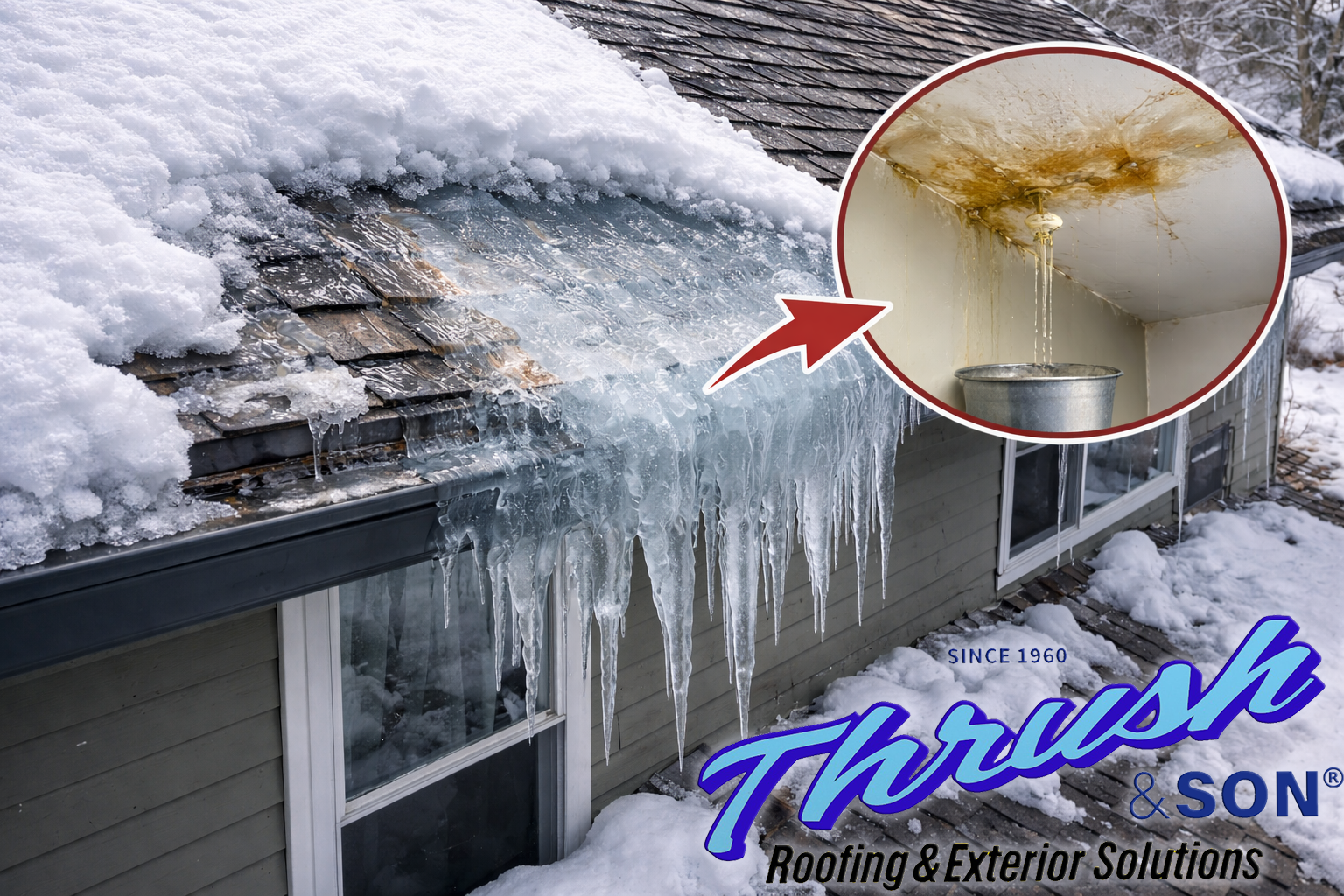
Ice damming is one of the most destructive winter problems homeowners face. Those massive icicles hanging from your roof edge? That’s not just pretty—it’s a warning sign of ice damming, where water backs up under shingles, seeps inside, and causes leaks, rot, mold, and structural damage. At Thrush & Son, we’ve fixed ice damming damage in thousands of homes nationwide since 1960, and the pattern is always the same: poor attic insulation, inadequate ventilation, and heat escaping from the living space melt snow on the roof, which refreezes at the cold eaves.
The good news? Ice damming is preventable with the right approach. Below are 7 powerful prevention tips that stop ice damming before it starts, protect your roof, and save you from costly repairs. Let’s break it down so you can keep your home safe all winter long.
What Exactly Is Ice Damming?

Ice dams occur when snow on a warm roof melts, runs down to the colder eaves, and refreezes into a dam of ice. Water backs up behind this dam, finds weak spots in shingles or flashing, and leaks into your home. It’s not just cosmetic—this issue can ruin ceilings, insulation, walls, and even lead to mold or electrical hazards. The root cause? Heat escaping from your living space into the attic, combined with poor ventilation that traps warmth and moisture.
7 Powerful Ways to Prevent This From Occurring
-
Boost Attic Insulation — Thick, even insulation (R-49+ recommended in most climates) keeps heat in your living space and the attic cold. This prevents snow melt on the roof—the #1 cause of creating an ice dam. Add blown-in cellulose or fiberglass for quick, effective coverage.

-
Improve Attic Ventilation — Balanced intake (soffit vents) and exhaust (ridge, gable, or power vents) removes trapped heat and moisture. Proper airflow keeps the roof cold and stops melt-refreeze cycles that lead to this situation.
-
Install Ice & Water Shield — Apply self-adhering membrane along eaves, valleys, and penetrations. If water does back up from an ice dam, this waterproof barrier keeps it out of your home—essential protection in snowy regions.

-
Use Heat Cables or Roof Heating — Electric heat cables along eaves and gutters melt snow before it dams up. Modern self-regulating cables are energy-efficient and safe—great for homes with persistent ice dam issues.
-
Seal Air Leaks from Below — Caulk and weatherstrip around recessed lights, attic hatches, plumbing vents, and chimneys. These leaks push warm air into the attic, fueling damming. A tight air barrier is one of the most powerful prevention steps.
-
Ensure Proper Roof Slope & Design — Steeper roofs shed snow better and reduce risk. If your roof is low-slope, extra insulation, ventilation, and ice & water shield become even more critical to combat this winter ice issue.
-
Schedule Professional Inspection & Maintenance — Thrush & Son checks for these risks during roof evaluations—missing ventilation, thin insulation, or poor flashing—and fixes them before winter hits. Early action saves thousands in damage.
External resource: Learn more about roof ice damming prevention from the Asphalt Roofing Manufacturers Association: asphaltroofing.org.
Complement your ice damming prevention with other improvements: Parts of a Roof, Vinyl Siding Styles, and Casement Windows Guide.
Built on Trust Since 1960

🔗 Connect With Our Team
➡️ Follow W. Allen Thrush for trusted leadership insights in exterior construction.
➡️ Stay connected with Corey Thrush for forward-thinking ideas and innovation.
➡️ Explore homeowner success stories on Facebook.
➡️ Discover project highlights and craftsmanship on Instagram.
➡️ Get timely updates and exterior education on Twitter (X).
➡️ Learn more through our LinkedIn Business Page.


Leave a Reply