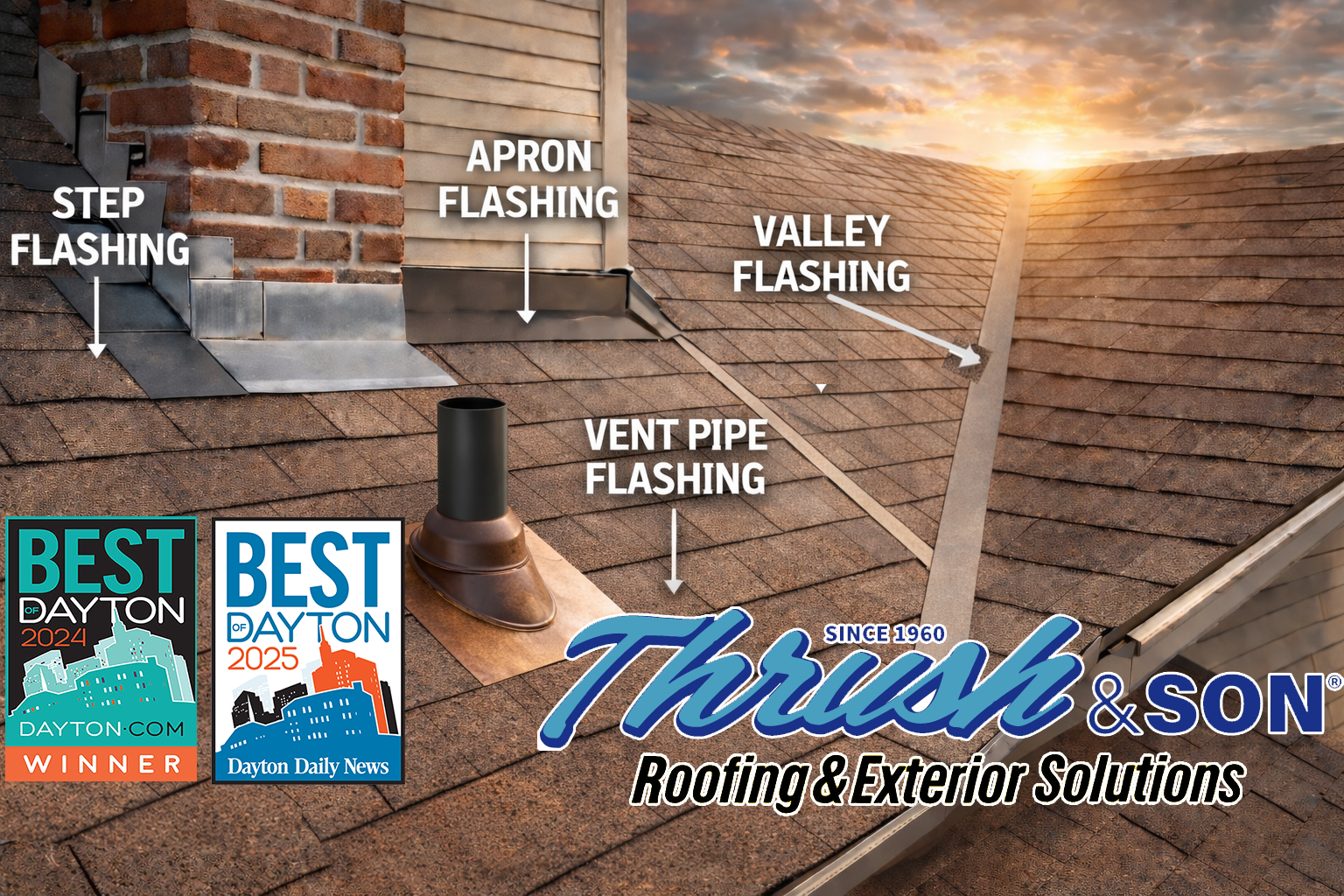
What Is Roof Flashing, and What Does It Do?
Roof flashing is one of the most important — and most misunderstood — components of a roofing system. Homeowners rarely notice it until something goes wrong, yet flashing failures are one of the leading causes of roof leaks.
This guide breaks down what roof flashing is, what it does, what it’s made of, and how to spot problems early — so you can protect your home before water damage becomes an expensive surprise.
What Does Roof Flashing Do?

Roof flashing helps provide a watertight seal wherever your roof has a joint, penetration, or transition. These are the most vulnerable points on any roof.
Flashing is installed:
- Around chimneys, vents, skylights, and pipes
- Where two roof surfaces intersect
- In roof valleys
- Where the roof meets exterior walls or siding
Its job is simple but critical: direct water away from these vulnerable areas and safely off the roof. When flashing is installed correctly, water never has a chance to sneak behind shingles or into your home.
Contractors install flashing during roof installation, but a qualified roofing professional can also add or upgrade flashing after installation if problems are discovered.
What Is Roof Flashing Made Of?

Modern roof flashing is typically made of metal because of its durability, flexibility, and resistance to corrosion.
Common flashing materials include:
- Galvanized steel
- Aluminum
- Copper
- Zinc
- Stainless steel
Flashing can be pre-formed for standard applications or hand-cut and shaped for complex roof designs. A trusted contractor will select the right flashing material based on your roofing system, roof geometry, and local climate.
Properly installed flashing works best when paired with a reliable roofing system — the two are designed to function together, not separately.
Signs of Roof Flashing Problems
Even high-quality flashing can deteriorate over time. Temperature changes, wind, settling, and age can cause flashing to loosen, crack, or fail — often before shingles show visible wear.
An annual visual check can help catch flashing problems early. You don’t need to climb on your roof (and shouldn’t). Many warning signs can be spotted safely from inside your home or from the ground.
Inside the Home, Watch For:
- Leaks into living spaces, garages, or porches
- Ceiling water stains
- Water dripping down the backside of decking or chimneys in the attic
- Attic water stains
- Daylight visible around vents or pipes in the attic
From Outside (Ground Level), Look For:
- Loose, damaged, or missing shingles
- Loose, bent, or missing flashing
Any of these signs could indicate a flashing issue — or another roofing problem entirely. Either way, they’re a signal to have your roofing system inspected by a professional.
Why Roof Flashing Matters More Than Homeowners Realize
Many homeowners assume leaks mean “bad shingles.” In reality, flashing failures are often the root cause — and they’re frequently excluded from manufacturer warranties because flashing is considered an installation detail.
That’s why proper flashing installation matters just as much as shingle selection. A roof is only as strong as its weakest transition point.
Keep Your Home Safe from Ice Dams This Winter
To learn more about other weather elements your home may face—such as heavy snow, freeze-thaw cycles, and related risks like leaks or structural damage—check out this helpful Ice Dam Prevention Guide: 7 Powerful Ways to Protect Your Roof. The blog from Thrush & Son explains what causes ice dams, their warning signs, and seven effective strategies (like better attic insulation, ventilation, and leak barriers) to prevent winter roof damage and costly repairs.
Built on Trust Since 1960

Since 1960, Thrush & Son® has been a family-owned and operated company built on craftsmanship, integrity, and long-term relationships. For more than six decades, homeowners across the Miami Valley have trusted our team to install roofing systems the right way — with attention to details like roof flashing that protect homes for the long haul.
For more homeowner education and exterior improvement insights, explore our growing Home Improvement Minute blog.
For additional ideas on improving exterior performance year-round, explore exterior home upgrades across the Miami Valley.
🔗 Stay Connected
➡️ Connect with W. Allen Thrush on LinkedIn for leadership & legacy insights.
➡️ Follow Corey Thrush on LinkedIn for innovation and vision.
➡️ Join our homeowner family on Facebook for real stories.
➡️ Explore behind-the-scenes craftsmanship on Instagram.
➡️ Get pro tips and updates on Twitter (X).
➡️ Visit our LinkedIn Business Page for company news, awards, and opportunities.
Leave a Reply