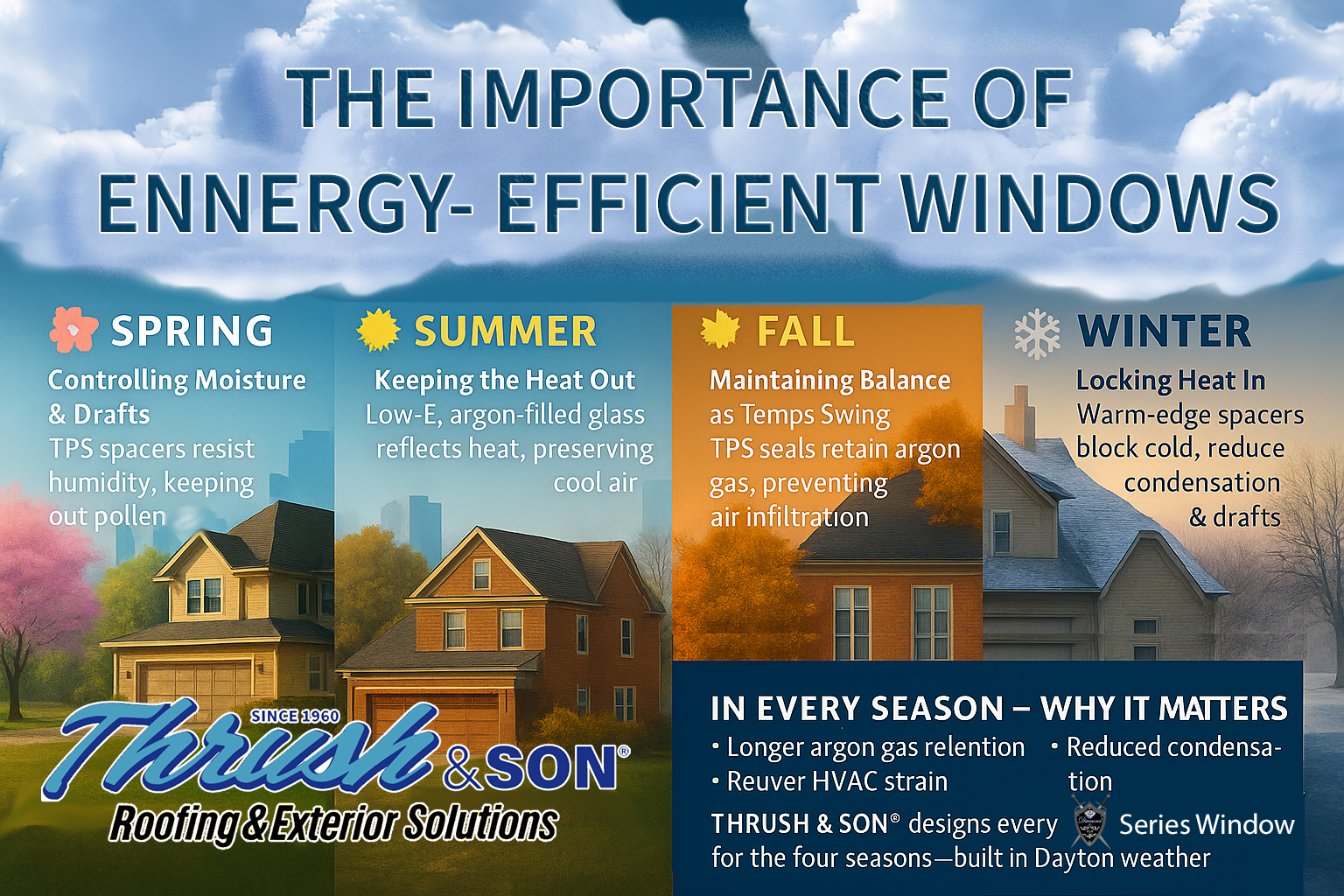
Gas filled windows hide their most useful feature in plain sight: a thin layer of invisible gas sealed between the panes that slows heat on its way through the glass.
You can’t see it, smell it or test it at home. That’s exactly why it gets oversold on some quotes and ignored on others. Argon, krypton and plain air all behave differently, and the right choice depends less on the gas than on the gap it fills.
This lab report breaks it down: how gas filled windows work, which gas belongs in which window, whether the gas leaks out, and how to check what’s in yours before you spend a dollar.

Argon suits the wider gap of a double-pane window. Krypton earns its price in the narrow gaps of triple-pane. A little gas may escape over the years, but the number that matters is the NFRC-rated U-factor on the label.
What’s In This Guide
How Gas Filled Windows Slow Heat
Heat moves through the space between two panes in two ways: it conducts through the gas itself, and it rides the gas as it circulates from the warm pane to the cold one. Swap ordinary air for a heavier, slower gas and both of those paths get weaker.
According to InterNACHI, argon conducts heat at roughly two-thirds the rate of air, and krypton insulates better still. Gas filled windows almost always pair the gas with a low-E coating, which reflects heat back toward its source. The coating and the gas work as a team.
Pick a Gas: Air, Argon or Krypton
Tap an element to see how it performs inside gas filled windows, where it fits and what it costs.
Air: The Baseline
100% conductivityDry air sealed between two panes insulates better than a single pane of glass. It’s the yardstick every gas is measured against.
Older double-pane units and budget windows. It’s also what ends up inside a unit after the gas escapes and moist air takes its place.
No added cost. Upgrading to argon is usually a small line item on a new window.
Argon: The Everyday Upgrade
~67% of airConducts heat at about two-thirds the rate of air, which trims heat loss without changing how the window looks.
The wider ½-inch (11–13 mm) gap of double-pane windows. That makes argon the natural fit for double-pane gas filled windows.
Inexpensive. InterNACHI calls it the more cost-effective choice, especially in wider gaps.
Krypton: The Narrow-Gap Specialist
Better than argonA better insulator than argon, and it shines in tight spaces where argon would fall behind.
The narrow ¼- to ⅜-inch (6–9 mm) gaps of triple-pane windows, where a thinner unit still needs high performance.
More expensive to produce. In a wide double-pane gap it rarely earns the extra cost.
Gas properties and gap widths: InterNACHI. Tap any element to switch.
The Gap Decides the Winner
The biggest mistake shoppers make with gas filled windows is comparing gases without comparing gaps. Each gas has a sweet spot, and a premium gas in the wrong gap is money spent on a number you’ll never feel.
On any quote for gas filled windows, ask for three things in writing: the gas, the gap width and the NFRC-rated U-factor of the whole window.
| Fill | Ideal gap | Typical window | Cost |
|---|---|---|---|
| Air | Any | Older or budget double-pane | None added |
| Argon | ½ in. (11–13 mm) | Double-pane | Low |
| Krypton | ¼–⅜ in. (6–9 mm) | Triple-pane | Higher |
Source: InterNACHI, Window Gas Fills.
Lab note: the gas is one ingredient. Glass coatings, the spacer at the edge and the frame all change the final number, so judge gas filled windows by the whole-window rating, not the gas alone.
Does the Gas Leak Out?
A little, over time. InterNACHI reports estimates that gas filled windows may lose as much as 1% of their gas per year, depending on build quality, installation, climate and sun exposure.
That sounds alarming until you see the threshold. InterNACHI cites the National Glass Association: a window keeps its rated properties while about 80% of the gas remains. Even at a 1% yearly loss, it notes, the window would still be effective after 20 years.
The real failure is a broken seal. When the edge seal fails, moist air replaces the gas and fog forms between the panes. At that point the problem is the seal, not the gas.

How to Check Your Windows
You can’t measure the gas without special equipment, but you can learn a lot about your gas filled windows in ten minutes.
- Find the paperwork. The original work order often lists the gas fill.
- Read the tag. Look along the bottom inside track for a label from the maker.
- Look at the spacer. Two small sealed holes along the edge often mark where gas went in.
- Clean the outside first. Then check for fog. Moisture you can’t wipe off is inside the unit.
- Find the NFRC label on any window you’re shopping for and compare U-factors.
- Lower is better. NFRC says U-factor measures how well a window keeps heat in.
Sources: InterNACHI and the National Fenestration Rating Council.
Red Flags on a Window Quote
- A gas name with no number. The quote says “argon” or “krypton” but never lists the NFRC-rated U-factor.
- No NFRC label. The sample window has no rating label you can read.
- Krypton in a wide gap. A premium charge for krypton in a standard double-pane unit, where argon is the cost-effective fit.
- Vague answers. Nobody can say which gas, which coating or what the glass warranty covers.
Want the bigger picture? ENERGY STAR estimates that Northern-zone homes replacing single-pane windows with certified ones save about $568 a year on average. Gas filled windows are part of how certified windows reach those numbers.
The Takeaway Worth Sharing
You can’t see the gas. You can read the label. Shop the U-factor, and let the gas match the gap.
Send this to a friend comparing quotes for gas filled windows.
Ready to Compare Real Numbers?
Thrush & Son®: family-owned exterior pros since 1960.
If you’re in the Miami Valley and shopping for gas filled windows, read the Thrush & Son® guide to argon gas in windows, then ask for the rated numbers on every option.
➡️ Schedule in Dayton➡️ View All ServicesCall (937) 833-5136 · 115 Jefferson St, Brookville, OH 45309
- GAF President’s Club Contractor
- Best of Dayton 2024 Winner · 2025 and 2026 Finalist
- BBB Accredited A+
Further Reading
Official sources: InterNACHI, the National Fenestration Rating Council and ENERGY STAR.
Gas Filled Windows FAQ
Are gas filled windows worth it?
Usually, yes. Argon conducts heat at about two-thirds the rate of air and adds little to the cost of a new window. Judge the whole window by its NFRC-rated U-factor.
Is argon or krypton better?
Krypton insulates better, but it costs more and performs strongest in the narrow gaps of triple-pane windows. Argon is the cost-effective fit for the wider gap of a double-pane window.
Does the gas leak out of windows?
Slowly. Some estimates put the loss at up to 1% a year, and a window keeps its rated properties while about 80% of the gas remains. A failed seal is the bigger concern.
How can I tell if my windows have gas?
Check the original work order, the maker’s tag on the bottom inside track, and the spacer for two small sealed fill holes. Fog between the panes suggests the seal has failed.
Written by Corey Thrush, Vice President and third generation of Thrush & Son®.
Leave a Reply