
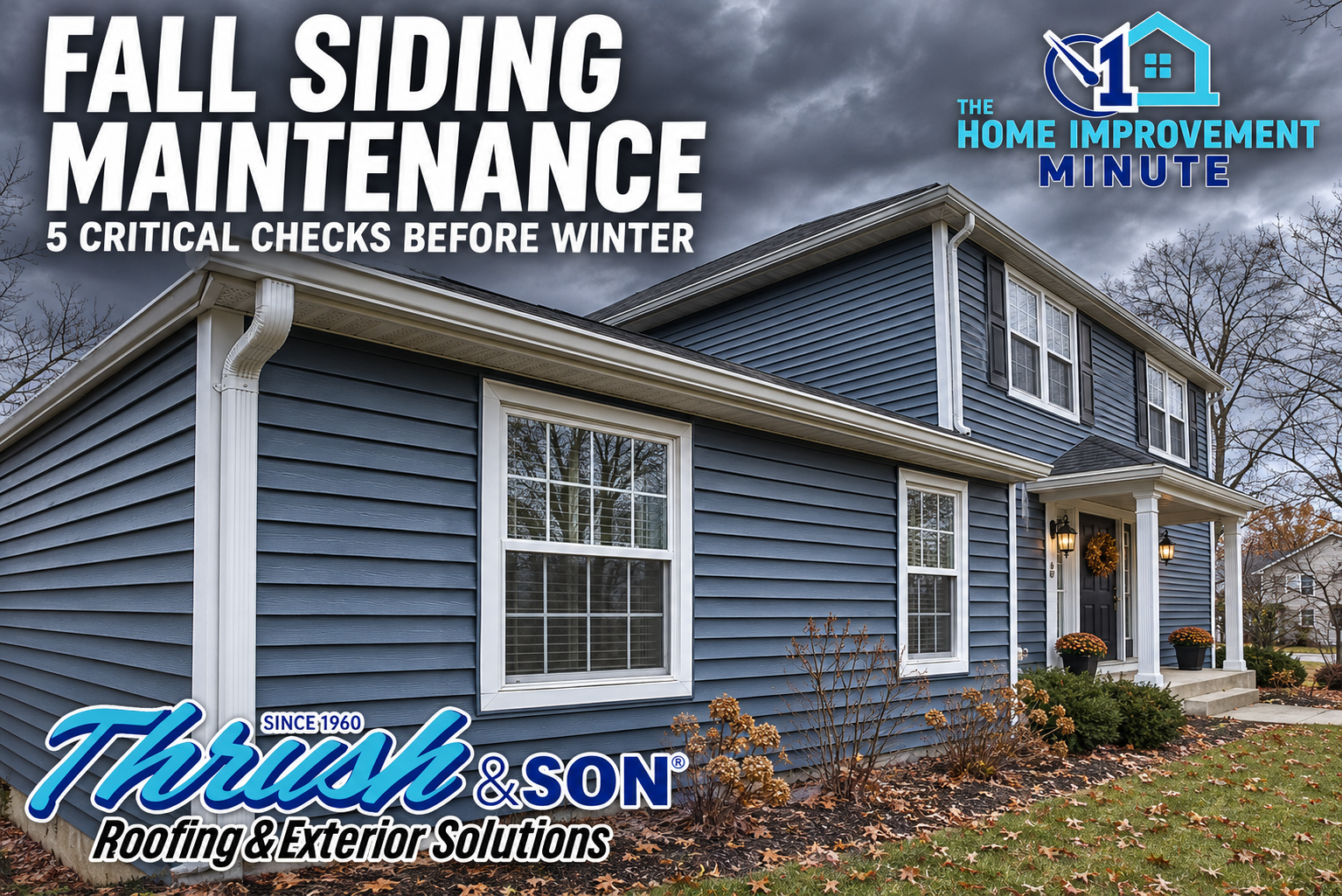
Caulking Vinyl Siding: Why the Gaps Are There on Purpose
Caulking vinyl siding feels like the responsible thing to do. You see a seam, a gap at a corner, a little slot along the bottom edge, and the instinct says seal it before winter. With vinyl, that instinct is wrong more often than it’s right.
Walk down the caulk aisle at any hardware store in October and you’ll see the plan forming in people’s carts: three tubes, a gun, an open Saturday. By Sunday night every seam on the house has a tidy white bead. By February, some of those panels are buckling, because the gaps they sealed were built in to let the siding move.
The Home Improvement Minute is the homeowner side of the Thrush & Son® family, exterior pros since 1960. This guide to caulking vinyl siding shows how vinyl works, which gaps to leave alone, and what actually stops a leak.
Vinyl panels hang loose on purpose so they can grow and shrink with the weather, and water behind them is supposed to drain out. Caulking vinyl siding at overlaps, corners and J-trim fights that design. Caulk belongs on trim and other materials, not panel joints. Leaks get fixed with flashing and panels put back right.

What’s In This Guide
How Vinyl Siding Works, and Why Caulking Vinyl Siding Backfires
Vinyl isn’t a sealed shell. It’s a loose-fitting rain screen that moves all year.
It Moves
The Polymeric Exterior Products Association says vinyl expands and contracts with outdoor temperature, and installed panels must be able to slide side to side.
It Hangs Loose
Nails go in the center of the slot with a dime’s width of room under the head. The panel hangs on them instead of being pinned tight.
It Drains
The Department of Energy’s Building America program notes most cladding leaks, so walls rely on a drainage layer behind it to send water down and out.
Put those three together and the problem with caulking vinyl siding is clear. A bead across a lap or into a receiver pins a panel that needs to slide, and it can trap water that’s trying to drain. The wall ends up worse than it started.
Caulking Vinyl Siding: Myth or Fact?
Tap a card to flip it. Six things homeowners hear about caulking vinyl siding, checked against the people who write the installation rules.
Where Caulk Does Belong on a Vinyl-Sided House
Caulking vinyl siding panels is out, but caulk itself isn’t the enemy. It just has a narrower job.
Painted Trim Joints
Wood or composite trim around doors and windows often uses sealant at its own joints. Follow the trim maker’s guide and keep it off the vinyl.
Where Other Materials Meet
Brick, stone or a different cladding beside vinyl may call for sealant at that transition. The vinyl side still needs its own receiver and clearance.
Fixtures on Mounting Blocks
Lights, vents and faucets usually sit on a block the siding fits around. Whether that block gets sealant depends on the product, so check first.
A simple test before caulking vinyl siding anywhere: if the gap is between two pieces of vinyl, or between vinyl and its own trim piece, leave it open. If you’re not sure, photograph it and ask. Our guide to exterior house trim helps you name each piece.
What to Do Instead of Caulking Vinyl Siding
Most of the time, the urge toward caulking vinyl siding starts with a stain, a draft or a loose piece. Each one has a better answer.
- Trace the water. Watch in the rain. Overflowing gutters and missing kick-out flashing cause more siding stains than open seams do.
- Re-seat loose panels. A panel that unlocked in the wind snaps back with a siding tool. Caulk can’t hold it.
- Swap cracked pieces. A damaged panel gets replaced, not glued.
- Keep bottom openings clear. Pull mulch and leaves away so water can drain.
- Chase drafts inside. Siding isn’t the air barrier. Drafts usually point to windows, outlets or insulation.


If panels look wavy rather than loose, the cause is usually how they were nailed. Our guide to vinyl siding installation problems shows what to look for, and none of the fixes involve caulking vinyl siding.
Cleaning is the other half of good care. A soft brush and mild soap keep the finish looking new and make cracks easy to spot.
Already Caulked It? Here’s the Undo
You’re not the first to try caulking vinyl siding. Most of the time this is easy to reverse before it does harm.
Find the Beads That Matter
Look for caulk at overlaps, at panel ends in corners and J-trim, and across bottom openings. Those are the spots where caulking vinyl siding restricts movement and drainage.
Remove It Gently
On a mild day, slice and peel the bead with a plastic scraper. Avoid metal blades and solvents that can mar or soften vinyl.
Test the Slide
A loosened panel should shift slightly side to side with light hand pressure. If it won’t move, the nailing may be too tight.
Call for Buckling
Panels that already rippled or bowed after caulking vinyl siding often need to be re-hung. That’s a job for a siding crew.

★ Bonus: Stovetop Hot Cocoa
Ten minutes, one pan. Pour a mug before you walk the walls with your phone camera.
Ingredients (Serves 4)
- 4 cups whole milk
- 1/3 cup unsweetened cocoa
- 1/3 cup sugar
- 1/2 cup chopped dark chocolate
- 1 tsp vanilla and a pinch of salt
Method
- Whisk cocoa, sugar and salt into 1 cup of milk over medium heat.
- Add the rest of the milk and warm until steaming.
- Stir in the chocolate until smooth.
- Take it off the heat and add vanilla.
- Top with marshmallows or whipped cream.
The Takeaway Worth Sharing
“Vinyl siding is built to breathe, shift and drain. Caulk the trim if it needs it. Leave the panels alone.”
Send this caulking vinyl siding guide to the friend with three tubes of caulk in the cart.
Not Sure What That Gap Is For?
Thrush & Son® — Trusted exterior pros since 1960. President’s Club, 34,000+ customers, proudly serving Dayton and the Miami Valley with roofing, siding, windows, doors and gutters.
Send us a photo before caulking vinyl siding yourself. For a full pre-winter walk-through, read our local fall siding checklist for Miami Valley homes, then book a no-obligation visit. Most projects take 1 to 3 days.
Call (937) 833-5136 · 115 Jefferson St, Brookville, OH 45309
Further Reading
Official sources: Polymeric Exterior Products Association, Installation Notes · U.S. DOE Building America, Drainage Plane Behind Cladding
Stay Connected With the Thrush & Son® Family
Caulking Vinyl Siding FAQ
Can you caulk vinyl siding?
Not at the panel joints. Vinyl industry guidance says not to caulk overlap joints or panels where they meet corners and J-trim. Sealant can belong on separate trim or where vinyl meets another material.
Why are there gaps at the corners of my vinyl siding?
The panels need room to expand in summer heat. Corner posts and J-trim have deep channels that hide those gaps while letting the panels move, which is why caulking vinyl siding at corners causes trouble.
What happens if vinyl siding is nailed too tight?
The panel can’t slide as it expands, so it ripples or bows. Installers leave about 1/32 of an inch under each nail head for that reason.
How do I fix a loose vinyl siding panel?
A panel that unlocked can usually be snapped back with a siding zip tool. Cracked or torn panels should be replaced, and caulking vinyl siding won’t hold a loose piece.
Is it normal for water to get behind vinyl siding?
Some, yes. Most cladding lets water past, which is why walls have a drainage layer and flashing behind the siding to send it back out.
Should I caulk around windows on a vinyl-sided house?
Not where vinyl panels sit in the J-channel. The window’s flashing behind the trim does the waterproofing. If water gets in near a window, have the flashing checked.
Leave a Reply