
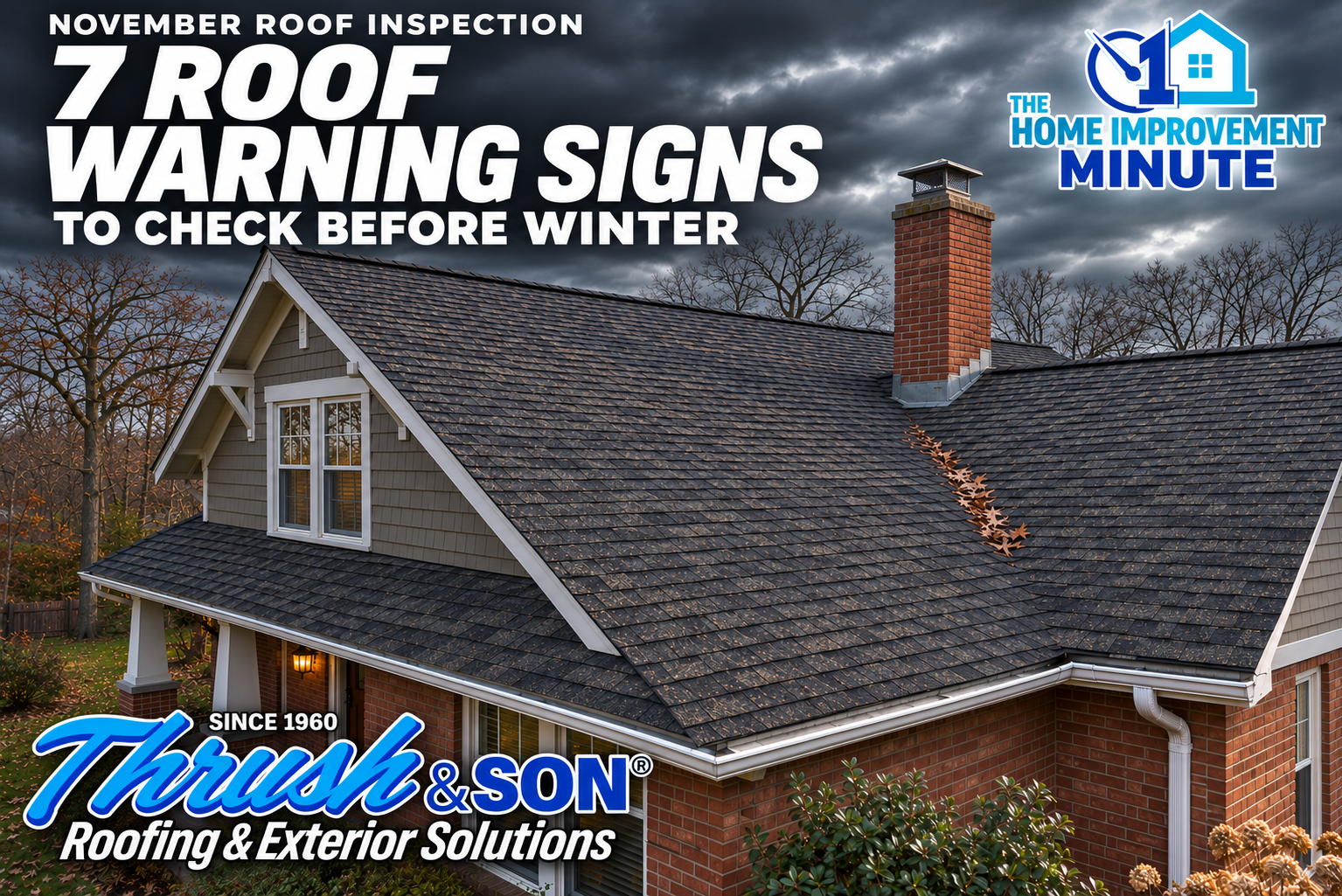
Roof Inspection Before Winter: Know What Your Roof Is Up Against
A roof inspection before winter is the one chance you get to see your roof clearly before snow covers the evidence for three or four months. In October the leaves are still coming down. By January, everything is white. The window in between is short, and it’s the reason this guide exists.
Think about the people who bought a house last spring. The home inspector called the roof “serviceable” and moved on. Nobody has looked at it since. Then the first heavy snow sits on it for a week, the sun melts the bottom edge, and a brown ring shows up over the guest bed. The roof didn’t change overnight. It just finally got tested.
The Home Improvement Minute is the homeowner side of the Thrush & Son® family, exterior pros since 1960. This roof inspection before winter walk-through shows you five views of your own roof and what a professional visit should add.
Do your roof inspection before winter from five spots: the curb, the yard, the attic hatch, the rooms below and a rainy-day walk. Write down what you see, then have a pro check up close before the first snow.

What’s In This Guide
What Winter Puts on a Roof: Why a Roof Inspection Before Winter Matters
Summer tests a roof with heat. Winter tests it with weight, water and temperature swings, all at the same time.
Weight
FEMA’s Snow Load Safety Guide puts a foot of fresh snow anywhere from 3 to 21 pounds per square foot, depending on how wet it is. A sagging deck or rotted board has less to give.
Water That Waits
Snow melts from the bottom on sunny days and refreezes at night. That water sits against flashing and seams for weeks, finding every gap a summer storm would pass over.
Cold, Brittle Materials
Sealants stiffen, rubber pipe boots crack and loose shingles snap in winter wind. Small flaws you can see in fall become openings by February.
None of this means a sound roof will fail. It means a roof inspection before winter is your last easy look, while the shingles are dry, the gutters are reachable and crews can still work comfortably.
The Five-View Roof Inspection Before Winter
Tap a view. You never need to climb a ladder. Bring your phone and take a dated photo of anything that looks off.
From the Curb
- Does the ridge run straight, or does it dip?
- Do any slopes look wavy or sunken?
- Are there patches that don’t match the rest?
- Is the chimney standing plumb?
Flag it if: any line that should be straight isn’t. A dip can point to softened decking underneath.
From the Yard
- Zoom on each slope with binoculars or your phone.
- Look for missing, curled or lifted shingle edges.
- Check valleys for piled leaves and twigs.
- Look at pipe boots and vents for cracks or rust.
Flag it if: damage shows up on more than one slope. That points to wear, not a one-off.
From the Attic Hatch
- Look for daylight where there shouldn’t be any.
- Check the wood for dark stains or a damp smell.
- See whether insulation is flattened or wet.
- Make sure vents aren’t blocked by insulation.
Flag it if: you see frost on nail tips on a cold morning. Warm, moist air is reaching the attic.
From the Rooms Below
- Scan ceilings near outside walls and the chimney.
- Check closets and corners people rarely look at.
- Look for peeling paint or bubbles in drywall.
- Note any musty smell in upstairs rooms.
Flag it if: a stain grows after rain. Mark its edge in pencil and check again after the next storm.
On a Rainy Day
- Watch where gutters overflow.
- See whether downspouts actually carry water away.
- Look for water running behind the gutter.
- Listen for drips in the attic.
Flag it if: water shows up anywhere besides the downspout outlet. In winter, that water becomes ice.
Five views take about half an hour across two days. Keep the photos in one album and bring it to the professional part of your roof inspection before winter. It turns “something looked weird” into a specific spot a pro can check in minutes.
Where Winter Leaks Usually Start: Every Break in the Roof
Shingles shed water well across an open slope. Trouble tends to start wherever something interrupts that slope: a chimney, a vent stack, a skylight, a wall that meets the roof. Each of those spots depends on metal flashing and sealant to stay dry.
During a roof inspection before winter, those interruptions deserve the closest look. Sealant that cracked over the summer has months of meltwater ahead of it. A rubber boot that split in July won’t heal in January.
The fix is often small when it’s caught early. A pro can tell you whether the leak path is the flashing, the brick or the cap before anyone starts patching.

What a Professional Roof Inspection Before Winter Adds
Your five views find clues. A pro on the roof confirms them and finds what can’t be seen from the ground.
What You Can Do
- See: shape, color changes, missing pieces and overflow.
- Track: stains, attic moisture and when problems show up.
- Gather: install date, invoices and warranty papers.
- Skip: ladders, roof walking and wet or icy days.
What a Pro Adds
- Touch: loose shingles, soft decking and failed seals.
- Measure: attic ventilation and insulation depth.
- Explain: which findings can wait and which can’t.
- Show: close-up photos of each issue, slope by slope.
A good roof inspection before winter ends with a short written summary, not just a verbal “looks fine.” If a contractor recommends a full replacement after a quick look, our guide on comparing roofing estimates helps you get a second opinion on the same terms.
When to Schedule Your Roof Inspection Before Winter

- After the leaves drop. Valleys and gutters are clear enough to read.
- On a dry day. Wet shingles hide wear and are unsafe to walk.
- Before the first lasting snow. Once it sticks, the surface is hidden.
- With time to act. Leave a few weeks for any work your roof inspection before winter turns up.
Missed the window? A roof inspection before winter can still happen on a clear, dry day in December. Snow or frost on the roof limits what anyone can see, so ask whether a spring follow-up makes sense. If a replacement is the answer, our guide to cold weather roof installation explains how crews handle it.
★ Bonus: Slow Cooker Apple Cider
Start it before the rainy-day part of your roof inspection before winter. The house smells like fall by the time you’re back inside.
Ingredients (Serves 8)
- 1 gallon apple cider
- 1 orange, sliced
- 3 cinnamon sticks
- 1 tsp whole cloves
- 2 tbsp brown sugar, optional
Method
- Pour the cider into a slow cooker.
- Add the orange slices, cinnamon and cloves.
- Stir in brown sugar if you like it sweeter.
- Cook on low for 3 to 4 hours.
- Ladle into mugs and leave the cooker on warm.
The Takeaway Worth Sharing
“Your roof doesn’t get worse in winter. Winter just shows you what it already was. Look first, while you still can.”
Send this roof inspection before winter checklist to a friend whose ceiling has a stain they keep meaning to ask about.
Book Your Roof Inspection Before Winter
Thrush & Son® — Trusted exterior pros since 1960. President’s Club, 34,000+ customers, proudly serving Dayton and the Miami Valley with roofing, siding, windows, doors and gutters.
Bring your five-view photos. For the local version of this checklist, read our Miami Valley guide to the warning signs to check this month, then book a no-obligation visit. Most projects take 1 to 3 days.
Call (937) 833-5136 · 115 Jefferson St, Brookville, OH 45309
Further Reading
Official sources: FEMA P-957, Snow Load Safety Guide · U.S. DOE Building America, Managing Snow Loads
Stay Connected With the Thrush & Son® Family
Roof Inspection Before Winter FAQ
How often should a roof be inspected?
Many roofers suggest twice a year, once in spring and once in fall, plus a look after any major storm. A roof inspection before winter is the one most homeowners skip.
What does a roof inspection include?
During a roof inspection before winter, a pro checks the shingles, flashing, valleys, vents, gutters and attic, then explains what they found with photos and notes which items can wait.
Can snow damage a roof?
Heavy snow adds real weight. FEMA says a foot of wet snow can weigh about 21 pounds per square foot. Meltwater that refreezes can also work into weak seams, which is why a roof inspection before winter focuses on flashing.
What if the inspector finds a problem in winter?
Many fixes can still happen on dry days. If the weather blocks a permanent fix, ask about temporary protection and when the full work will be scheduled.
Do I need to be home for a roof inspection before winter?
It helps. You can point out stains, share your photos and give access to the attic, which makes the visit faster and more complete.
Should I knock snow off my roof myself?
Only from the ground with a roof rake, and only on the lower few feet. Never climb onto a snowy roof. Heavy loads are a job for trained crews.
Leave a Reply