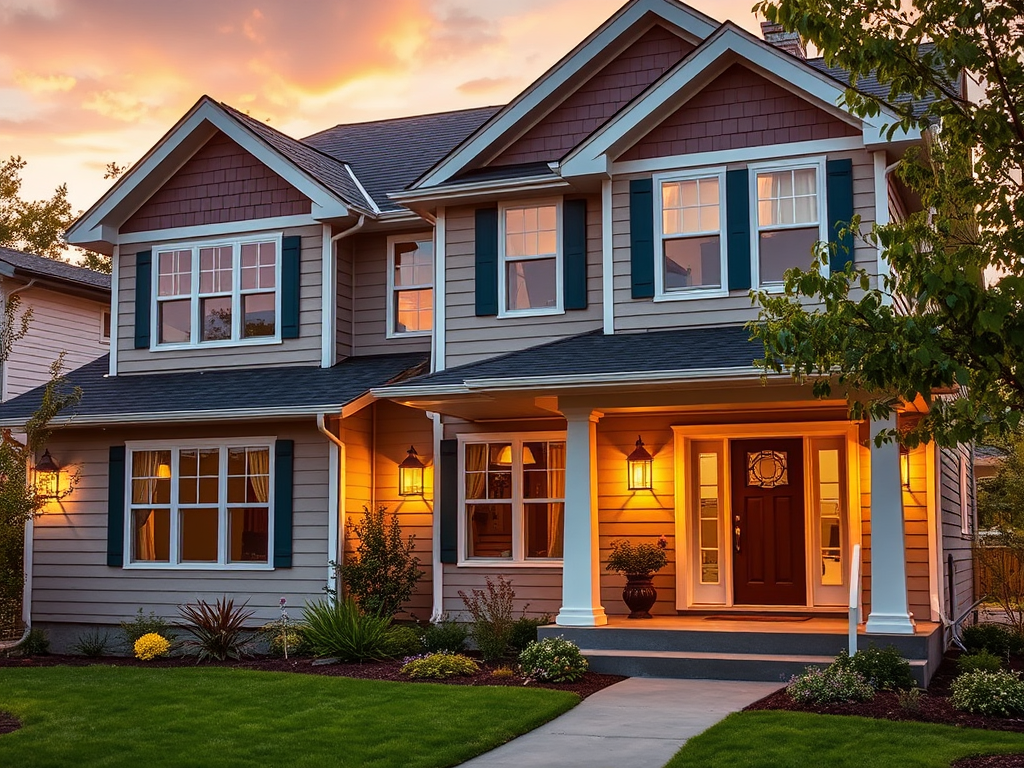
The siding color options that look perfect on a chip indoors can turn a shade grayer, warmer or flatter once a Miami Valley sun moves across your walls, and some fade or heat up faster than others.
That’s why comparing siding color options is less about a favorite shade and more about two questions. First, will the color hold up to years of sun? Second, what will it actually look like on your house at 8 a.m., at noon and on a gray January afternoon?
This guide answers both. You’ll see how vinyl color is made and certified, why deeper shades run hotter, how light direction changes what you see in Kettering, Centerville and Dayton, and how to test a sample the right way before you sign.

Pick from certified colors, respect the heat that deep shades absorb, and judge every sample outdoors on the wall it will cover, in morning, midday and late-day light, before you match trim and roof to it.
What’s In This Guide
How Siding Color Options Hold Up to Sun
Vinyl siding color options aren’t painted on. The color is built into the panel during manufacturing, so there is nothing to peel. What changes over time is how well that color resists ultraviolet light, and that depends on the pigments and the formula behind each shade.
Pigments Set the Ceiling
Light, soft colors have always been the easiest to keep steady. Deep blues, greens and near-blacks need more advanced pigment technology to stay true, which is why the darkest siding color options arrived later than whites and tans.
Standards Measure the Change
According to ASTM International, its D7856 specification combines the solid-color (D6864) and variegated-color (D7251) siding standards and uses two-year outdoor weathering to estimate long-term color retention.
Certification Checks the Shade
Under the industry program described by the Vinyl Siding Institute, manufacturers can certify individual siding color options to those standards, with unannounced third-party inspections twice a year.
What to ask: when you narrow your siding color options, ask whether each specific color is certified for color retention, not just the siding line. Certification is listed color by color, so the shade you pick should carry it.
Heat, Reflectance and Deep Shades
Color isn’t only about looks. It decides how much sunlight a wall soaks up. Research from Lawrence Berkeley National Laboratory, shared through the U.S. EPA, notes that 95% of sunlight arrives as visible or near-infrared light, and that “cool” pigments reflect much of the invisible near-infrared part. That’s how some deeper colors can stay cooler than their look suggests.
Designers describe the visible side with light reflectance value, or LRV: a scale that runs from black at the bottom to white at the top. Among siding color options, a high-LRV color bounces more light, reads brighter from the street and stays cooler. A low-LRV color absorbs more.
Heat matters for vinyl. A Massachusetts building regulations advisory cites the Vinyl Siding Institute: normal-grade siding begins to distort at 160–165°F, and sunlight reflected off double-paned low-e windows has been measured above 200°F. The same advisory notes darker colors absorb more heat and soften before lighter ones, and that low sun in late fall, winter and early spring is more likely to cause it.
Keep it in proportion. PEPA, the industry group behind the Vinyl Siding Institute, says temperatures that cause significant distortion are not routinely reached, that both light and dark colors can be affected, and that darkness is at most a secondary factor. It’s a site check, not a reason to rule out deep siding color options.

| Color family | Light reflected | What to check |
|---|---|---|
| Whites and creams | Most | Glare on south walls at midday; pick a soft white if the house sits in full sun. |
| Taupes and greiges | Upper middle | Undertone shifts warm in late-day light; view it at 5 p.m. before you commit. |
| Grays | Middle | Can read blue under clouds and beige under warm sun; compare on two walls. |
| Blues and greens | Lower middle | Confirm the exact color is certified for color retention. |
| Charcoals and deep browns | Least | Confirm certification and look for low-e windows on neighboring houses aimed at the wall. |
Run the Daylight Test on Siding Color Options
Choose a light condition and a color family. The facade shifts the way real siding does as the sun moves, and the readout shows how much light that family reflects and what to watch for.
Crisp and Slightly Cool
Early light on an east wall is clear and lower in the sky. Colors look clean and close to the chip, so this is a fair first look, but not the only one.
Washed Out and Lighter
A high summer sun flattens texture and bleaches color. Most siding color options read a shade lighter at midday, and bright whites can glare.
Warm and Golden
Late sun on a west wall adds warmth. Grays lean beige, taupes turn richer, and blues can look softer. This is when neighbors see your house on the way home.
Flat and True
Gray Miami Valley skies remove shadows and show a color’s true undertone. If you’ll still like it on a cloudy January day, it’s a keeper.
Darker and Cooler
A north wall gets little direct sun, so colors read deeper and cooler than the sample. When comparing siding color options, many homeowners go one step lighter on that side.
White and cream: the easiest color to keep steady and the coolest wall. Watch midday glare and pair with a darker trim or roof for depth.
Taupe and greige: forgiving in every light and kind to dirt. Check the undertone in late sun, when it can swing pink or yellow.
Gray: a chameleon. It can lean blue under clouds and warm under sunset, so view it on two walls before you commit.
Slate blue: rich curb appeal with more heat load. Ask for the certification on this exact shade, and look for reflective windows aimed at the wall.
Charcoal and deep brown: the most dramatic and the warmest wall. Choose a certified color built for dark shades and do the reflection check on site.
Sample Siding Color Options Outdoors, Not on a Screen
Screens and printed brochures can’t show how a color behaves in real sun. Use real siding samples and follow a short field routine.
- Get full-size samples. A panel piece, not a chip, so you see the texture and the shadow line.
- Hold them against the house. Prop samples on the wall they’ll cover, not on a table or in the garage.
- Check three times of day. Morning, midday and late afternoon, plus one cloudy day if you can.
- Step back to the street. Color lightens with distance, so judge from where neighbors see it.
- Shortlist two or three. Too many siding color options blur together; compare finalists side by side.
- Confirm certification and stock. Ask whether each finalist is certified and available in the profile you want.
Profile changes color too. A deep shadow line, like a Dutch lap or board and batten, makes the same color look darker than a flat panel. Our guide to the types of vinyl siding shows how each profile catches light.
HOAs, Trim and the Roof Around Your Color

Check the rules first. Many neighborhoods around Kettering, Centerville and Dayton have HOA covenants, and some historic areas have design review. Ask for the approved list of siding color options or the application before you fall for a color. Approval in writing beats a surprise letter after install.
Read the street. Your siding color options should fit the block without copying the house next door. Note the brick, stone and roof colors nearby; they’re part of the view whether you like it or not.
Set the trim. White trim lifts mid-tones and deep colors. Matching trim gives a quieter, modern look. Black trim adds edge to light walls.
Then pick the roof. Once the siding is chosen, the roof should complement it. Our roof color ideas guide walks through that step, and our look at energy-efficient siding covers the insulation side.
Color Mistakes That Show Up Later
- Choosing from a phone screen. Screens shift color; real samples outdoors are the only fair test.
- Judging only at noon. Midday sun washes out siding color options, so a color can look darker every other hour.
- Skipping the certification question. Ask whether the exact color, not just the product line, is certified for color retention.
- Ignoring reflective glass nearby. Note any neighbor windows that throw sun onto your walls, especially before choosing a deep shade.
- Forgetting the HOA. Get written approval before materials are ordered.
The Takeaway Worth Sharing
The color on the chip is a guess. The color on your wall at 5 p.m. is the answer. Test outside, pick certified, and match the trim and roof last.
Share this with the neighbor holding siding samples up to the garage.
Narrowed It to Three? See Them on Your Wall
Thrush & Son®: family-owned exterior pros since 1960.
We bring real CertainTeed siding samples to homes across the Miami Valley so you can compare siding color options on your own walls, in your own light. For the trends behind this season’s favorite colors, read our fall siding trends guide, then book a visit.
➡️ Schedule in Dayton➡️ View All ServicesCall (937) 833-5136 · 115 Jefferson St, Brookville, OH 45309
- GAF President’s Club Contractor
- Best of Dayton 2024 Winner · 2025 and 2026 Finalist
- BBB Accredited A+
Further Reading
Official sources: ASTM International, the U.S. EPA (Berkeley Lab research), the Massachusetts Board of Building Regulations and Standards and PEPA.
Siding Color Options FAQ
How do I choose between siding color options?
Shortlist two or three certified colors, hold real samples on the wall they will cover, and check them in morning, midday and late-day light before choosing.
Do dark siding color options fade faster?
Deep colors need more advanced pigments to hold steady. Ask whether the exact shade is certified for color retention under ASTM standards.
Does dark siding get hotter?
Yes. Darker colors absorb more sunlight and heat. A Massachusetts advisory notes they soften before lighter colors when reflected sun from nearby windows hits them.
What is light reflectance value?
Light reflectance value, or LRV, describes how much visible light a color reflects, on a scale from black to white. Higher LRV colors look brighter and stay cooler.
Why does my siding sample look different outside?
Sun angle, cloud cover, wall direction and distance all change how color reads. Indoor light and screens can’t show those shifts.
Written by Corey Thrush, Vice President and third generation of Thrush & Son®.
Leave a Reply